

Middle School Friendships Can Get Weird: What Parents Need to Understand
Sunny O'Hara & The Middle School Maze Team
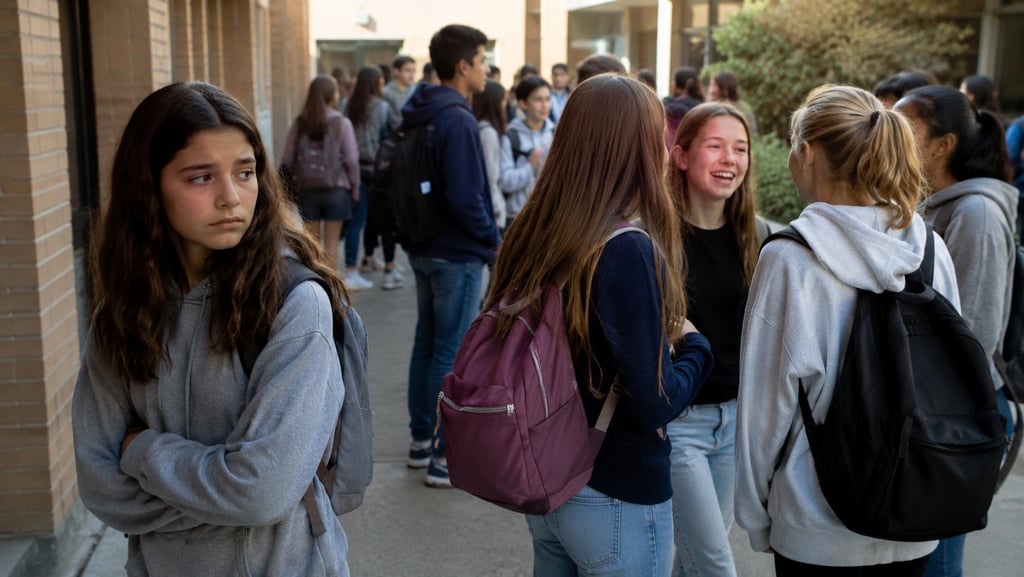

One week, your child and their best friend are practically attached at the elbow.
The next week, that same friend is sitting somewhere else at lunch, laughing with a new group, or replying to messages with a dry little “okay.”
Suddenly, your child is hurt. Really hurt.
You may hear:
“She doesn’t like me anymore.”
“He replaced me.”
“We’re not friends now.”
Or the middle school classic:
“Everything is weird.”
Honestly, that last one may be the most accurate.
Middle school friendships often do become weird, not because every child is dishonest or cruel, but because students are changing quickly. Their interests expand. Their social circles grow. They begin figuring out who they are and where they belong.
For parents, these changes can be painful to watch.
You may remember the friend who came to every birthday party, slept over at your house, rode in the back seat of your car, and knew exactly where the snacks were kept.
Now that child may seem distant.
Naturally, you wonder what happened.
Sometimes something did happen. But often, the friendship is changing because the children are changing.
Middle School Changes the Friendship Setup
Many elementary school friendships begin because children are simply near each other.
They sit in the same classroom, ride the same bus, live in the same neighborhood, or play together at recess.
That does not make the friendship any less real. Those connections can be warm, loyal, and deeply important.
Middle school, however, changes the setup.
Students move through several classes, meet children from other schools, join new activities, and spend less time with the same people each day.
A child who once saw a close friend almost constantly may now share only one class with that person.
The friendship that once happened automatically may suddenly require more effort.
One student I worked with believed her longtime friend was avoiding her because they no longer walked together between classes. After talking it through, she realized they had different schedules and were usually heading in opposite directions.
The friendship had not ended. The school day had changed.
That may sound obvious to an adult, but to a child who is used to constant closeness, less time together can feel like less love.
New Interests Bring New Friends
Middle school introduces students to activities, subjects, and groups they may not have experienced before.
A child may discover theater, band, robotics, volleyball, art, gaming, student leadership, or a new interest in music, fashion, science, or sports.
Those interests naturally bring new people into the picture.
Your child’s friend may begin spending time with students who enjoy the same activity. Your child may do the same.
A student can care about an old friend while also enjoying a new group. Middle schoolers do not always know how to hold both truths.
They may think:
“If she likes them, she must like me less.”
“If he wants to sit with them, I must not matter anymore.”
Friendship can begin to feel like a table with a limited number of seats. When someone new sits down, your child may fear they are being pushed out.
But closeness is not always a competition.
Sometimes children are discovering that different friends connect with different parts of who they are.
Students Are Still Figuring Out Who They Are
Middle school is a time of social experimentation.
Students may change how they dress, talk, joke, or behave around different groups.
A quiet student may become animated at practice. A child who acts silly with longtime friends may seem more serious around a new group. Someone who once loved an activity may suddenly decide it is embarrassing.
From the outside, this can look fake.
Sometimes it is simply uncertainty.
Middle schoolers are beginning to ask:
Where do I fit?
What helps me feel accepted?
How do I want other people to see me?
They do not always answer those questions consistently.
One former student told me she felt as though she had “a school personality, a home personality, and a friend personality.”
She was not trying to deceive anyone. She was still figuring out which parts felt most like her.
That process can affect friendships and leave old friends feeling confused or left behind.
Reduced Closeness Can Feel Like Rejection
Middle schoolers often view friendship in all-or-nothing terms.
Best friend or not a friend.
Included or excluded.
Close or forgotten.
There is not always much room in the middle.
When a friend texts less often, sits somewhere else, joins a different activity, or makes plans with another group, your child may experience the change as rejection.
They are not necessarily being dramatic.
The relationship mattered. The pattern changed. Their brain is trying to explain why.
The easiest explanation may be:
“I am not important anymore.”
Parents may be tempted to say:
“You are overthinking it.”
Or:
“You have other friends.”
Those statements may be true, but they rarely soothe the sting.
A better first response might be:
“It sounds like you miss how close you used to be.”
That does not blame anyone. It simply recognizes the loss your child feels.
Painful Does Not Always Mean Unhealthy
A friendship can change in a way that hurts without either child being cruel.
A shared activity may end. Different schedules may create distance. The children may no longer enjoy the same things. One may want more closeness than the other.
None of that feels good.
Growing apart can be awkward. There may be silence, mixed signals, and hurt feelings. Middle schoolers are not exactly famous for flawless communication.
Still, becoming less close is different from being intentionally humiliated, threatened, controlled, or repeatedly targeted.
Parents can help by resisting the urge to label every painful change as toxic, fake, or cruel.
Sometimes the simplest explanation is the right one:
The relationship is changing, and your child is grieving what it used to be.
Parents May Feel the Change Too
Parents can become attached to their child’s friendships.
You may know the friend’s family. You may have watched the children grow up together. You may have imagined them staying close for years.
So when the friendship shifts, you may feel disappointed, protective, or angry.
Sometimes a child says:
“She sat with someone else today.”
And the parent hears:
“That child betrayed my child.”
Before deciding what the situation means, pause and ask yourself:
Am I reacting to what happened today?
Am I remembering something painful from my own middle school years?
Does my child want advice, or do they simply need me to listen?
Your child’s story may not be your story.
Recognizing that difference can help you respond more calmly.
What Parents Can Say
Your child may not need you to repair the friendship. They may not even want advice right away.
Often, they need help making sense of the change.
You do not need a perfect speech. Try one of these:
“It sounds like you miss how things used to be.”
“Do you want me to listen, or help you think through what to do?”
“A friendship changing does not mean something is wrong with you.”
These responses do not dismiss the hurt, blame the other child, or rush your middle schooler toward a solution.
They simply let your child know they have been heard.
Sometimes that is the most helpful place to begin.
Avoid Writing the Ending Too Soon
Middle school friendship stories can change quickly.
The friend who seems distant this week may reconnect next week. A misunderstanding may clear up. A new group may not last.
Or the friendship may continue to fade.
Parents do not need to decide the ending immediately.
Try not to say:
“She was never a real friend.”
“You do not need him.”
“That friendship is over.”
Your child may still care about that person. The two friends may reconcile, and your child may feel uncomfortable telling you after hearing how strongly you judged the other student.
You can support your child without insulting the friend or declaring the relationship finished.
Leave room for the story to unfold.
Sometimes It Is More Than Growing Apart
Most changing friendships involve distance, new interests, awkwardness, or mismatched expectations.
Sometimes, though, the situation includes repeated cruelty, intimidation, humiliation, rumors, deliberate exclusion, or targeting.
Those behaviors deserve closer adult attention.
They are different from two children simply becoming less close.
For more guidance on recognizing harmful social behavior and deciding when adults should become involved, explore
Not Just Drama: A Parent’s Guide to Bullying, Rumors, and Exclusion.
Your Child’s World Is Getting Larger
Your child is not standing still. Neither are their friends.
They are learning what they enjoy, where they feel comfortable, and which relationships fit the person they are becoming.
Some friendships will grow with them.
Some will become quieter.
Some may end.
Others may return later in a different form.
A changing friendship is not always proof that something has gone wrong. Sometimes it is evidence that your child’s world is getting larger.
That larger world can feel uncertain. It can sting. It can leave your child wondering where they belong.
But it also creates room for new interests, new connections, and a fuller understanding of themselves.
While your child is figuring it out, your calm presence matters.
You cannot keep every friendship from changing.
But you can help your child understand that losing closeness with one person does not mean losing their ability to belong.
Get more warm, practical guidance for navigating the academic, social, and emotional sides of middle school.